
Conversation Analytics for Telecom Fraud & Loss Prevention
Detect SIM-Swap Fraud, Identify Suspicious Calls & Protect Customers with AITelecom carriers run high-volume fraud and loss prevention hotlines for stolen devices, SIM-swap, account takeovers, unauthorized changes, and suspicious account activity. These calls need to be handled with quick risk signal detection and a good customer experience.
Verbix.AI detects suspicious language, verification processes, escalation(s), and prioritizes fraud teams with the highest risk calls for immediate review based on conversations.
Telecom Fraud & Loss Prevention Challenges at Scale
Identifying SIM swap scams, social engineering attacks, device theft, agent verification bypasses, and revenue leakage across high-volume telecom contact centers.
SIM-Swap Fraud
Fraudsters might try to convince support to port the victim’s phone number to a different SIM or device.
Account Takeover
Credential compromise and social engineering can provide unauthorized access to customer accounts.
Stolen Device Reports
Fraud teams have to rapidly separate valid theft reports from suspicious attempts to game account or device services.
Social Engineering
Opponents utilize high-urgency tactics, personal information, and convincing arguments to persuade agents to circumvent security procedures.
Verification Failures
Conflicting identity checks could allow for unauthorized account access or service modifications.
High-Volume Fraud Calls
Because large telecoms may have millions of conversations related to fraud, it’s hard to do manual review.
Delayed Escalation
An unidentified suspicious chat may lead to a loss of money or a compromise of the customer’s account.
Customer Frustration
Legitimate customers impacted by fraud may be under stress or frustrated and need to be managed with sensitivity and urgency.
Limited Fraud Intelligence
Call recordings have rich expressions of fraud signals that are difficult to pinpoint by human sampling and manual QA.
Telecom Fraud Monitoring Without vs With AI
Compare manual fraud sampling with Verbix AI-driven real-time speech analytics, suspicious keyword detection, and automated risk escalation.

Without Verbix.AI
Manual call sampling
Limited fraud visibility
Delayed risk identification
Inconsistent verification monitoring
Missed suspicious conversations
Manual QA processes
Slow supervisor escalation
Limited fraud trend analysis
Example Scenario
Without AI conversation monitoring, telecom fraud teams rely on manual QA sampling and post-incident investigations, allowing SIM swap scams, social engineering tricks, and verification bypasses to slip through undetected until severe loss occurs.

With Verbix.AI
AI-powered conversation monitoring
Suspicious keyword detection
Verification compliance monitoring
Sentiment & escalation analysis
Automated risk alerts
Agent performance scoring
Fraud trend analytics
Faster investigation workflows
Example Scenario
Verbix.AI automatically monitors 100% of telecom customer interactions in real time, detecting suspicious language, verifying compliance, flagging high-risk conversations, and alerting fraud managers instantly for immediate intervention.
Telecom Organizations We Serve
Conversational AI for mobile network operators, broadband & cable providers, and telecom fraud & security teams to prevent account takeovers, detect SIM swap scams, and protect revenues.
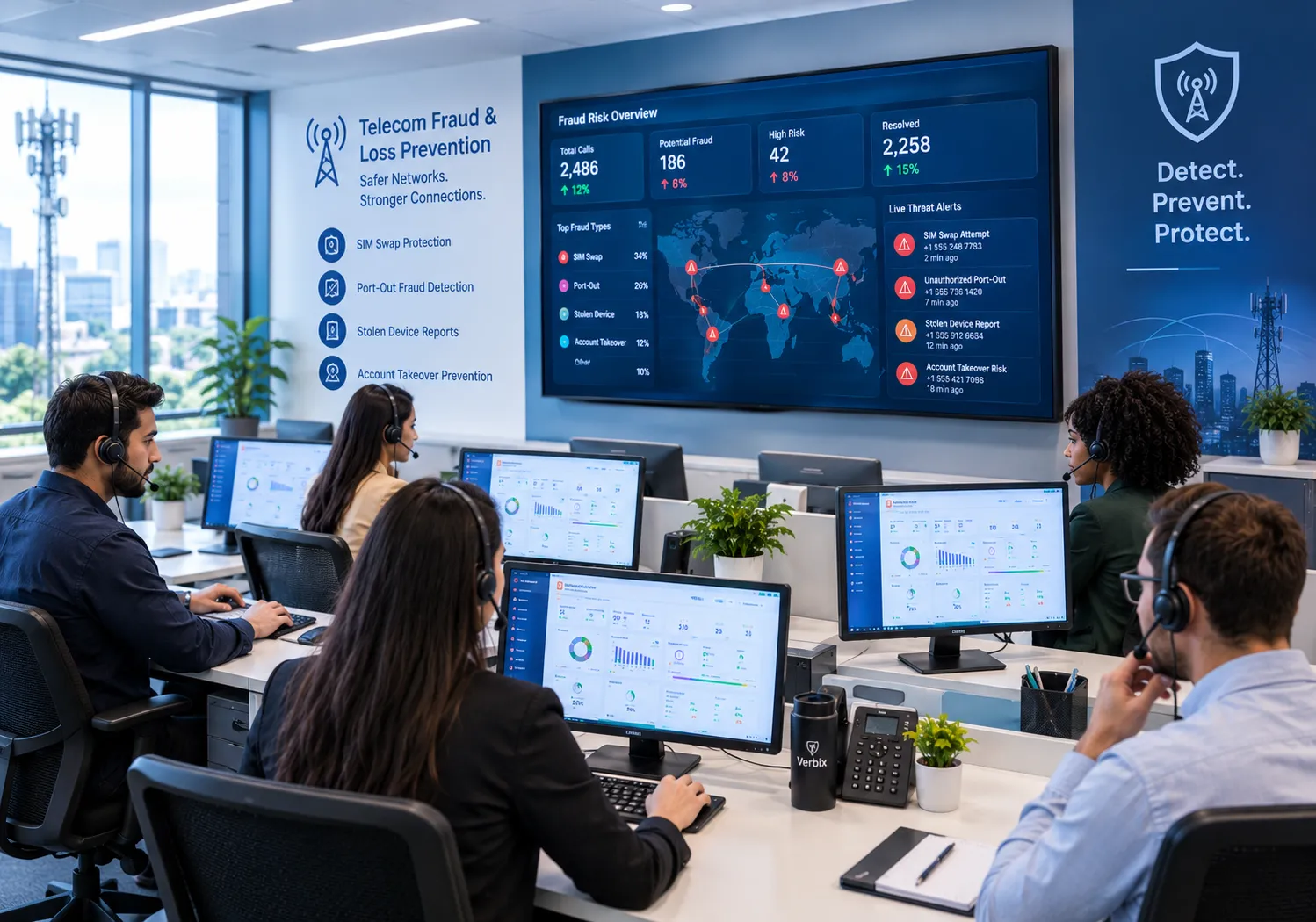
Mobile Network Operators
Protect mobile subscriber accounts from SIM-swap scams, unauthorized port-outs, stolen device reports, and fraudulent account takeovers.
Key Challenges
- SIM-swap fraud
- Account takeover
- Stolen devices
- Identity verification
- Unauthorized account changes
AI Use Cases
- Fraud conversation analytics
- Risk alerts
- Compliance QA
- Sentiment analysis
- Agent scoring
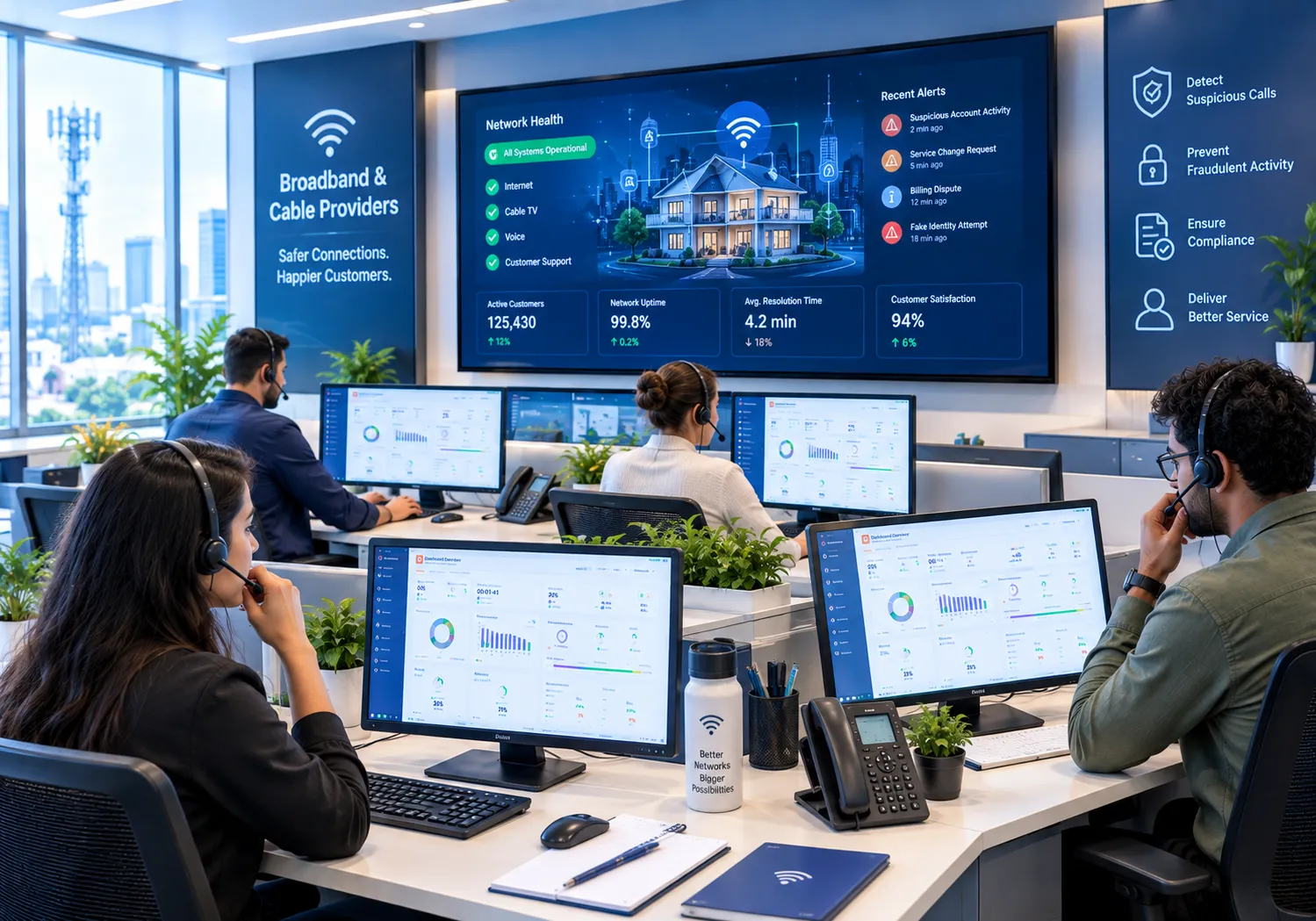
Broadband & Cable Providers
Shield internet and cable service providers against unauthorized service changes, billing fraud, fake identity sign-ups, and customer disputes.
Key Challenges
- Account takeover
- Unauthorized service changes
- Billing fraud
- Identity verification
- Customer complaints
AI Use Cases
- Suspicious conversation detection
- Automated QA
- Smart escalation
- Call transcription
- Risk analytics
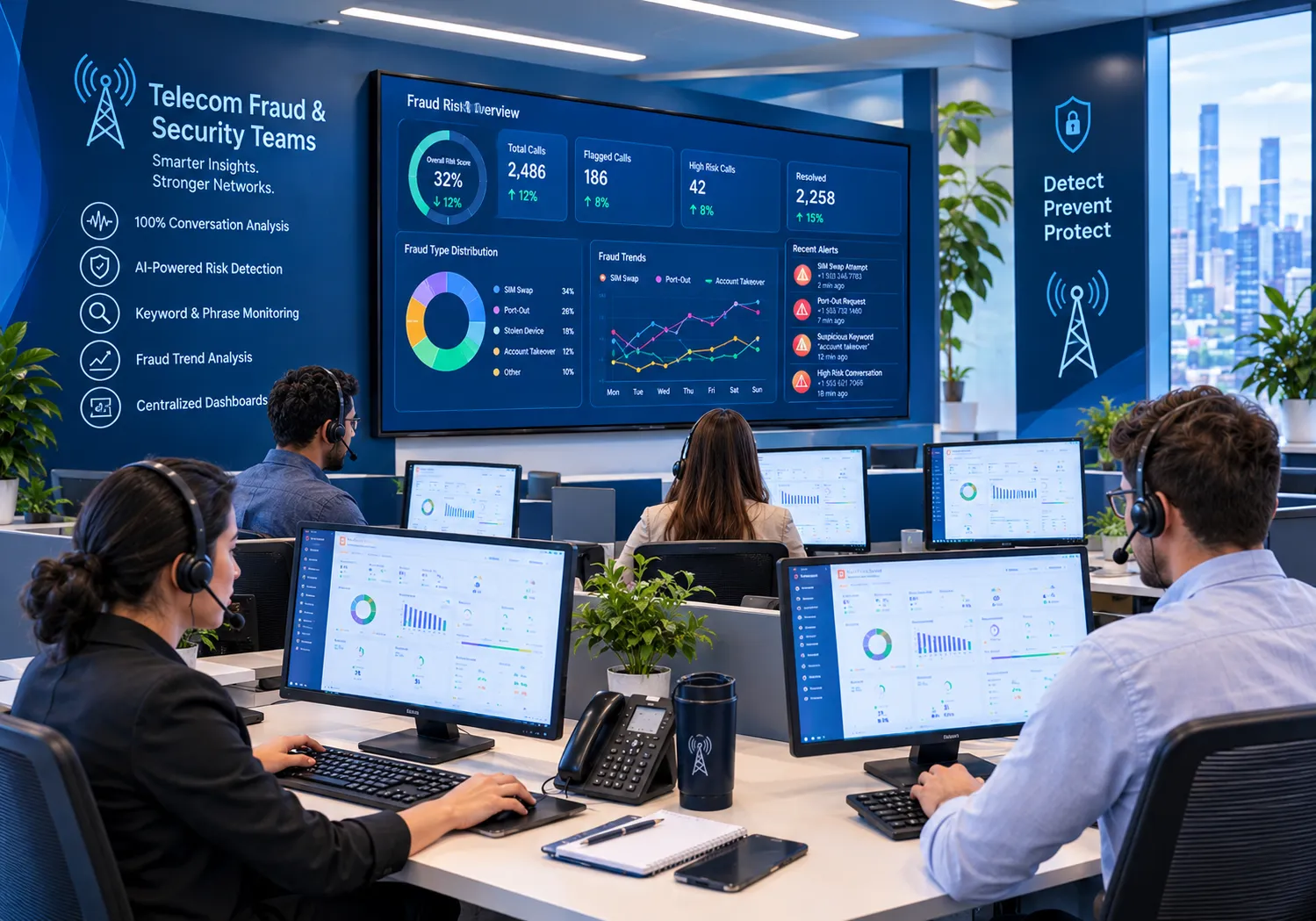
Telecom Fraud & Security Teams
Deliver 100% conversation analysis, AI-powered risk detection, and centralized fraud trend dashboards across high-volume telecom contact centers.
Key Challenges
- Large call volumes
- Complex fraud patterns
- Manual investigations
- Slow escalation
- Agent compliance
AI Use Cases
- 100% conversation analysis
- AI-powered risk detection
- Keyword & phrase monitoring
- Fraud trend analysis
- Centralized dashboards
How Telecom Fraud Teams Are Supported by Verbix.AI
SIM-Swap Risk Detection
Recognize messages having suspicious inquiries regarding SIM replacement, number transfer, account recovery or verification bypass.
Social Engineering Detection
Scan entire exchanges for signs of manipulation, urgency, requests for personal information and influence on operators.
Stolen Device Monitoring
Detect theft-related conversations at scale and enable tagging and prioritizing stolen device conversations.
Real-Time Risk Alerts
Highlight a predefined set of high-risk words, key phrases, and sentence styles to bring to the immediate attention of supervisor or fraud team for further investigation.
Verification & Compliance QA
Check if agents are following the identity verification and account security protocols.
Fraud Trend Analytics
Detect new fraud trends, most targeted procedures, high-risk agents, and repeating issues with loss prevention.
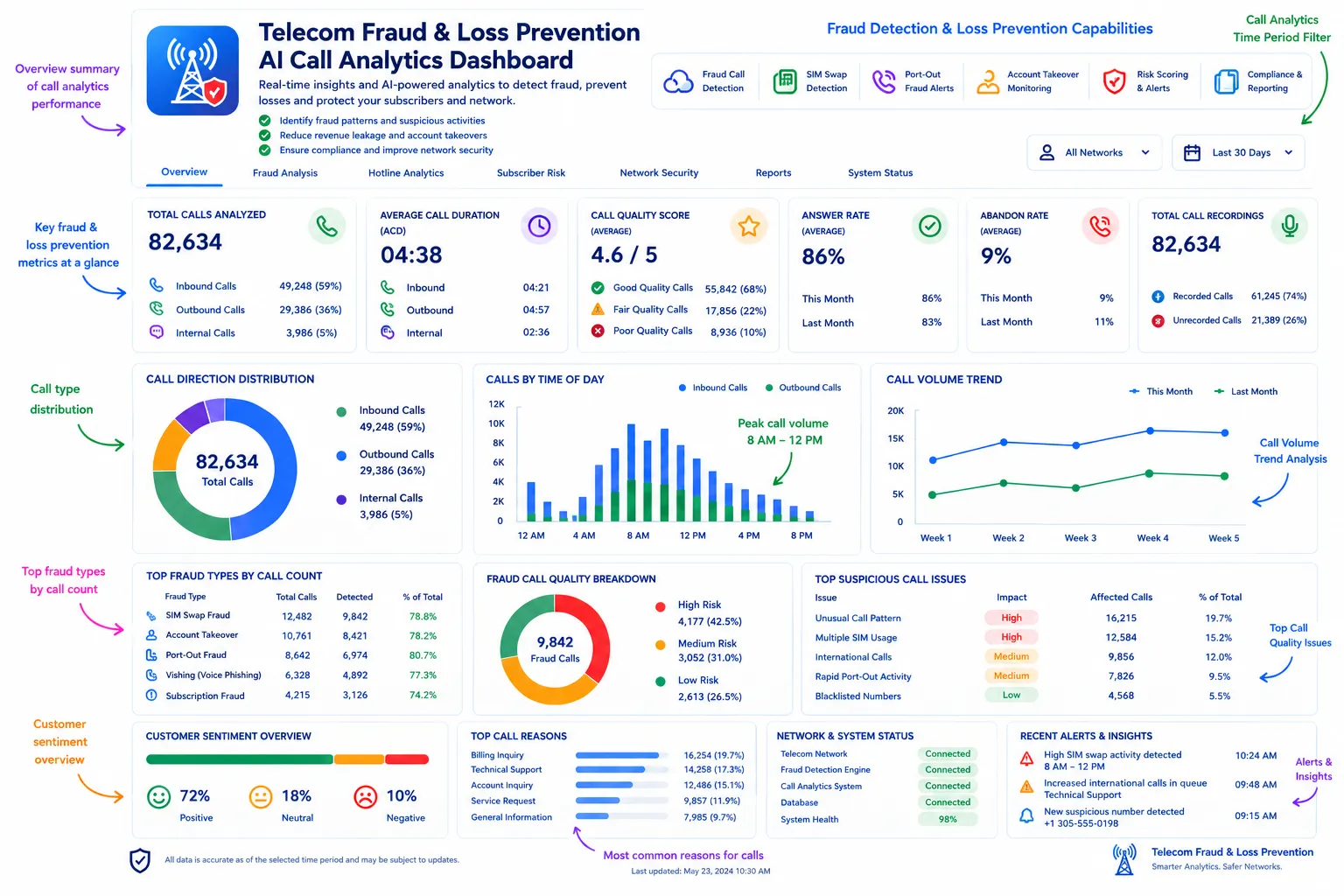
Complete Visibility into Every Fraud Hotline Conversation
Track each SIM-swap request, stolen-device report, account recovery call, identity verification interaction, suspicious account change, and fraud escalation at a single pane of glass with AI.
Client Testimonial
"Verbix.AI provides our fraud team with deep insight into the conversations with our customers. We are able to detect suspect interactions more quickly, track verification processes, and concentrate our investigators on the calls that demand the most attention."

Head of Fraud & Risk Operations Leading Telecommunications Provider
Frequently Asked Questions
Verbix.AI monitors customer interactions for red flags, such as suspicious language, the presence of fraud, any verifications needed, and potential threats to account security.
Yes. Teams can set up keyword, phrase, and conversation rules to detect calls related to SIM swaps, number porting, account recovery and other well-known fraud signals.
Yes. Conversation analytics can identify excessive urgency, manipulation techniques, suspicious requests and attempts to undermine verification protocols.
Yes. Organizations have the flexibility to define their own QA parameters to assess if the agent has conducted the necessary identity and account security measures.
Not Exactly. As for real-time voice biometric authentication, that would probably be considered an additional security technology, vs. the same technology. Verbix.AI's conversation analytics can deliver quality post-call and workflow-based fraud intelligence. If real-time voice biometric authentication is required, it would generally be added as a complementary security capability rather than considered the same capability.